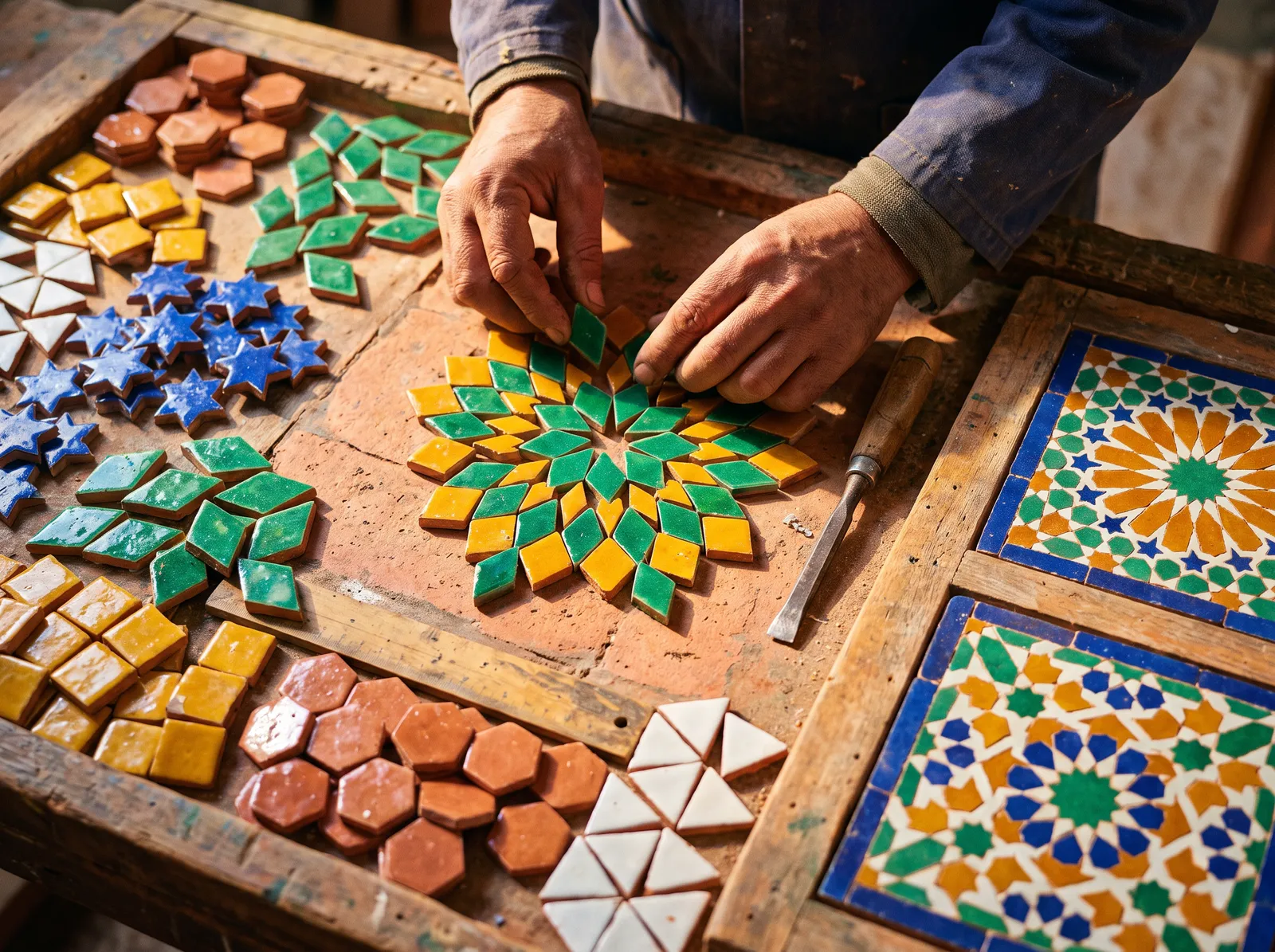
The scenario is familiar to many Moroccan brands: a beautiful logo delivered two years ago, and since then, every medium lives its own life. The community manager picks their own colours, the printer stretches the logo, the intern invents a typeface, and the website no longer matches the social feeds. This silent chaos destroys consistency, therefore recognition, therefore brand value. The solution has a name: the design system. Here is what it is, and why growing brands can no longer do without one.
What is a design system?
A design system is the organized set of rules and components that define how a brand expresses itself visually, everywhere. It goes well beyond the traditional brand guidelines: where guidelines say “here is the logo and the colours”, the design system provides ready-to-use components (buttons, cards, layouts, templates) and the rules for their use.
It is the difference between a list of ingredients and a recipe book. Guidelines list the elements; the design system explains how to assemble them in each situation: an Instagram post, a web page, a sales deck, a poster. Every new medium is built from existing bricks instead of being reinvented.
The concept comes from the digital product world, where it proved itself at scale, and now extends to the whole of brand expression. It naturally extends the identity work described in our guide on logo and brand identity in Morocco.
The hidden cost of inconsistency
Why care? Because inconsistency is expensive, in three invisible but very real ways. First in recognition: a brand is memorized through the repetition of identical signals. If every medium varies, memorization never settles, and the communication budget works at a loss.
Second in credibility: visual inconsistencies send a signal of negligence. A client who receives a proposal whose colours do not match the website perceives, even unconsciously, a lack of rigour. For a brand that sells trust, that is silent sabotage.
Finally in efficiency: without a system, every creation starts from zero. Every post, every page, every document is an improvised design decision, with the lost time and back-and-forth that implies. Teams debate choices already settled, and providers reinterpret the brand on every assignment.
What a complete design system contains
A design system worthy of the name covers several layers, from foundations to components:
- The foundations: logo and its variants, colour palette with precise usages, typefaces and their hierarchy, grid and spacing, icon and photography style.
- The components: buttons, forms, cards, banners, headers, content blocks, ready to assemble on the web and in materials.
- The templates: complete models for recurring cases (social post, presentation, newsletter, typical site page).
- The usage rules: what is allowed, what is forbidden, and how to adapt the system to unforeseen cases.
- The brand voice: tone, vocabulary and writing principles, because consistency is not only visual.
The whole ideally lives in a space accessible to everyone (internal teams, agencies, freelancers), kept up to date as a working tool, not as a PDF forgotten in a folder.
The design system applied to digital
Digital is where the design system deploys its full power. A website built on a component system evolves faster: a new page is assembled from existing, tested, consistent bricks, instead of being designed then developed from scratch every time.
Quality gains as much as speed. Shared components guarantee accessibility, performance and responsive consistency once and for all. Fixing a flaw in one component fixes it everywhere. And the user experience becomes predictable in the good sense: the user finds the same landmarks across the whole site.
This logic extends to digital products (applications, platforms) where it has become the standard of mature teams. It connects to the experience principles we detail in our article on UX/UI design in Morocco.
When does a Moroccan brand need one?
Not every business needs the same level of system. A small structure with a single channel and one person creating everything can live with simple, well-kept guidelines. The need for a system arises with multiplication: of channels, of materials, of contributors.
The typical triggers: several people or providers produce materials; the brand is present on the web, social, print and sales; the company is growing or going international; or a rebranding has just happened and the new identity must be locked in. This last case is crucial: deploying a new brand without a system means watching it unravel within months, as we explain in our guide to rebranding in Morocco.
The right reflex is to anticipate slightly: a system costs far less to set up when the company is in working order than to rebuild once chaos has settled in.
How to build your design system
Construction follows a pragmatic progression. You do not create an exhaustive system in one go: you start from the existing (or freshly created) identity, formalize the foundations, then systematize the most frequent materials first. A system useful from month one beats a perfect system delivered in a year.
Governance counts as much as creation: who maintains the system, who validates additions, how teams access it. A system without a keeper returns to chaos; a system too rigid gets bypassed. The balance is a clear frame with the capacity to evolve.
Finally, the system must be designed for its real users: the rushed community manager, the salesperson building a deck, the developer integrating a page. If using the system is simpler than ignoring it, consistency becomes natural. That is the ultimate success criterion.
Is your brand unravelling across materials and contributors? We build brand systems that lock in consistency without stifling creativity. Let’s talk about your brand
FAQ: design systems in Morocco
What is the difference between brand guidelines and a design system?
Brand guidelines list the identity’s elements (logo, colours, typefaces) and their basic rules. The design system goes further: it provides ready-to-use components (buttons, templates, layouts) and the rules to assemble them in each situation. Guidelines describe, the system equips. For a multi-channel brand, guidelines alone no longer guarantee consistency.
Does a Moroccan SME need a design system?
It depends on its complexity, not its size. An SME with a single channel and one content creator can live with well-kept guidelines. As soon as several people or providers produce materials across several channels, the system pays for itself: it saves time on every creation and protects consistency without permanent supervision.
How long does it take to create a design system?
A useful core (formalized foundations and templates for the most frequent materials) is built in a few weeks from an existing identity. The system then grows continuously, at the pace of real needs. The progressive approach is the right one: a quickly usable system that grows with the brand, rather than an exhaustive project that delays everything.
Who should maintain the design system in the company?
A clearly designated keeper, in-house or at your partner agency. Their role: validate additions, keep components alive, and guarantee the system stays accessible and current for all users (teams, providers, printers). A system without a keeper degrades within months; an identified keeper is generally enough to keep it alive.
Want a brand that stays consistent whatever the medium and whoever handles it? Explore our branding & design service: identity, design system and brand governance for consistency that lasts.